
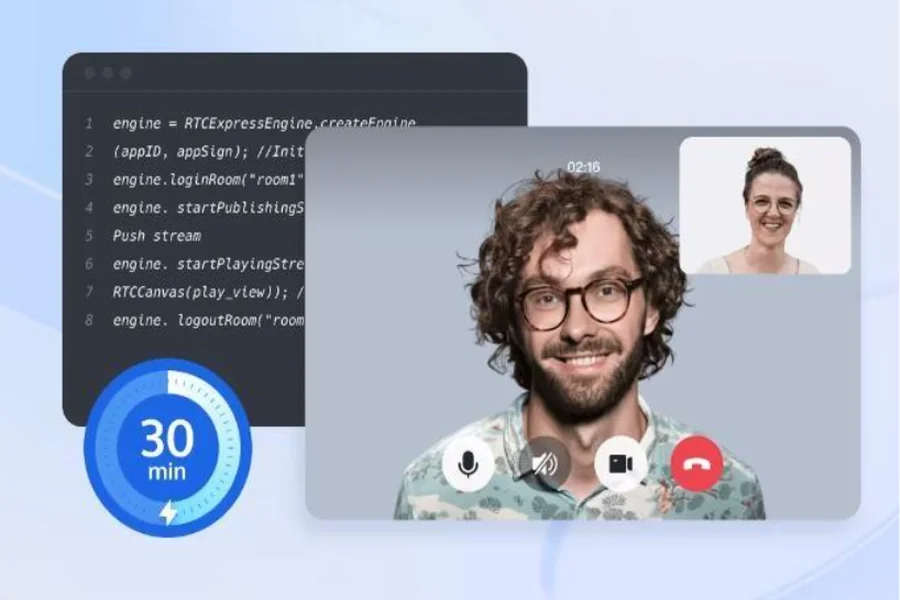
The digital transformation across industries has led to a surge in demand for seamless communication. Video call Software Development Kits (SDKs) have emerged as a key component in this communication evolution. These SDKs offer developers the tools to integrate real-time video and audio capabilities into their applications effortlessly. This blog explores the essence of video call SDKs and their pivotal role in enhancing app functionality, user engagement, and competitive advantage. With these SDKs, app developers can bypass the intricate processes involved in creating video call features from scratch, resulting in faster development times and reduced costs. Let’s delve deeper into what a video call SDK is, its key features, benefits, and top use cases.
What Is a Video Call SDK?
A Video Call SDK is a set of software development tools that allows developers to incorporate video and voice calling functionalities directly into their applications. It eliminates the need for applications to be built from the ground up with their own communication infrastructure by providing pre-built and customizable solutions. Essentially, it acts as a bridge between your application and the internet infrastructure required to host video and audio calls. Video call SDKs are equipped with various features and capabilities that support high-quality voice and video communication, facilitating seamless integration and user experience.
Key Features You Get From a Video Call SDK
Real-Time Audio and Video Calling
Video call SDKs offer real-time audio and video communication, ensuring users can connect instantly without delays. This is crucial for maintaining a natural conversation flow.
Group Calls and Multi-Party Rooms
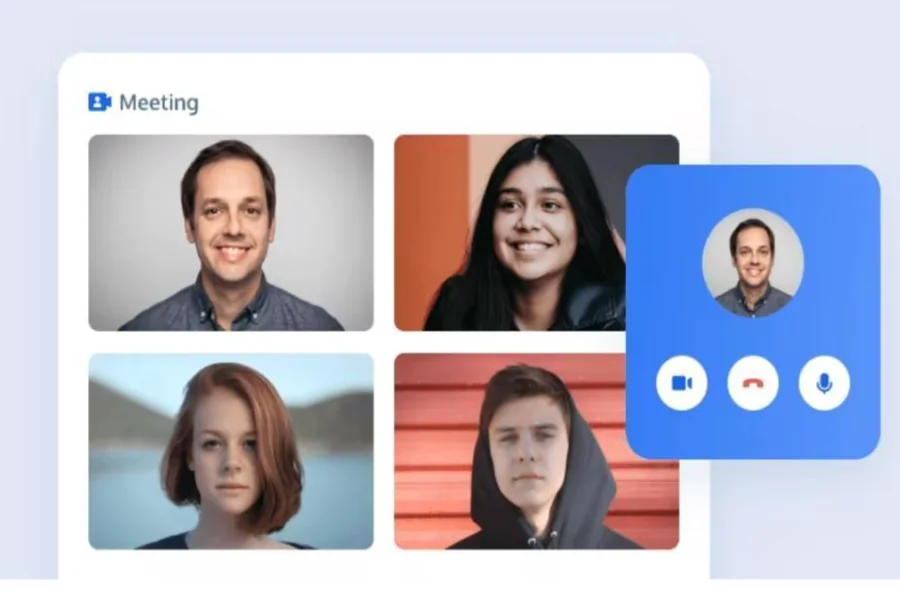
They support group calls and multi-party rooms, allowing users to communicate with multiple people simultaneously. This feature is particularly beneficial for business meetings and online classes.
Network Adaptation and Low Latency
SDKs come with network adaptation features that adjust the call quality according to the user’s internet connection, reducing latency to provide a smooth calling experience even on less than ideal networks.
Cross-Platform Compatibility
A robust SDK supports various operating systems and devices, ensuring users can connect from their preferred platform, whether it be iOS, Android, or desktop.
Built-In Security and Encryption
Security is paramount, and SDKs offer built-in encryption to protect audio and video streams from unauthorized access, ensuring privacy for all users.
Why Your App Needs a Video Call SDK Today
Faster Development and Lower Engineering Costs
With ready-to-use features, video call SDKs significantly reduce the time and resources needed for development. Developers can focus on other critical aspects of the app, thereby cutting costs.
Scalable Infrastructure for High Traffic
SDKs provide a scalable infrastructure that can support a large number of users concurrently without compromising on performance, essential for growing businesses.
Better User Engagement and Retention
Embedding video calling features enhances user experience, making the app more engaging. Engaging apps lead to higher user retention as people are likely to return for the smooth interactive experience.
Competitive Advantage in Your Market
Offering video calling can differentiate your app from competitors, providing a unique USP that can draw in users looking for comprehensive communication solutions.
Top Use Cases That Benefit From a Video Call SDK
Telehealth and Remote Medical Consultations
For healthcare apps, video call SDKs enable telehealth services, allowing doctors to consult patients remotely, improving accessibility to medical care.
Online Education and Virtual Classrooms
Education platforms use SDKs to create virtual classrooms where students can interact with teachers and peers in real-time, making online learning more effective.
Customer Support and Sales Communication
Businesses enhance customer support and sales with video calls, providing personalized assistance and boosting customer relationships.
Social Apps, Live Streaming, and Community Tools
Social applications and platforms that offer live streaming benefit from SDK integrations by providing users with dynamic and interactive experiences.
How TRTC Video Call SDK Enhances Your App
Ultra-Low Latency Real-Time Calling
TRTC’s SDK ensures ultra-low latency, providing seamless real-time communication that’s crucial for maintaining quality and user satisfaction.
Global Infrastructure for Stable Connections
With a robust global infrastructure, TRTC offers stable connections irrespective of user location, supporting international communication with minimal disruptions.
AI-Powered Noise Reduction and HD Video
The AI-powered noise reduction and HD video features ensure crystal-clear calls, enhancing the user’s experience by eliminating distractions.
Ready-to-Use UI Kits for Faster Launch
TRTC provides UI kits that facilitate faster app launches, allowing developers to implement video call features without lengthy design processes.
Flexible Integration for Web, Mobile, and Desktop
Offering flexible integration options, TRTC accommodates various platforms ensuring users have a consistent experience across web, mobile, and desktop.
Conclusion
Integrating a video call sdk into your app is a strategic move that can expand its functionality and appeal. These SDKs offer a range of features that can meet diverse application needs, from telehealth to online education, providing an edge over competitors. By utilizing video call SDKs, developers can save on time, cost, and resources while delivering an enriched user experience. In a world where seamless communication is key to success, incorporating video call capabilities can transform your app into a versatile, engaging, and valuable tool for your users.