
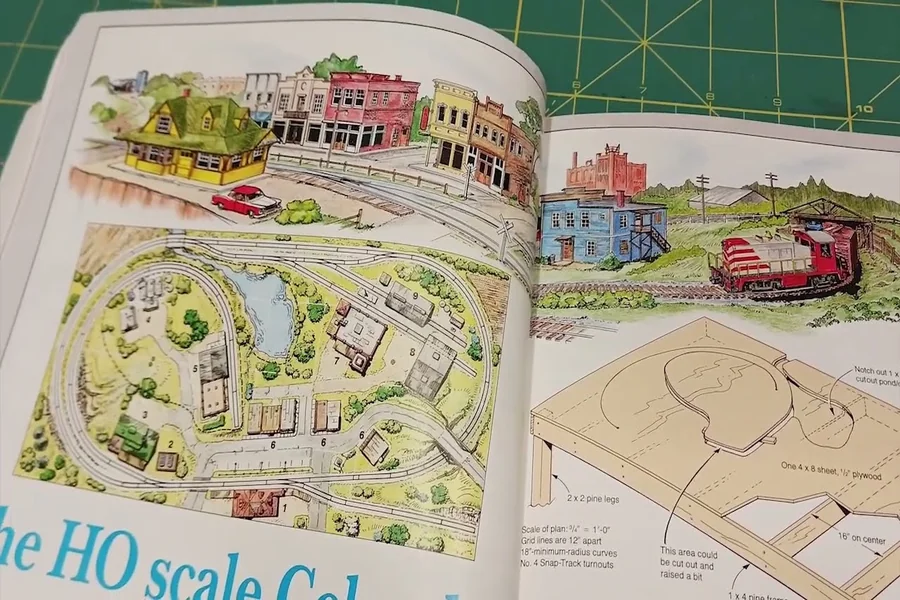
Model Railroader Magazine Track Plans are detailed railway layout designs published by Model Railroader Magazine. These track plans help hobbyists design and build realistic miniature railroads with accurate routing, scenery integration, and operational flow.
The magazine has been a leading source for model railroading enthusiasts for decades, offering expert guidance on layout construction, electrical wiring, scenery design, and scale modeling. Track plans are one of its most popular features because they provide ready-to-use blueprints for building model railroads of different sizes and complexities.
What Are Model Railroad Track Plans?
Track plans are detailed diagrams that show how model train tracks should be arranged.
They include curves, straight sections, junctions, stations, and switching yards.
These plans help hobbyists visualize how trains will move through a layout.
They also ensure efficient use of space in home or club setups.
Track plans can range from simple beginner designs to complex multi-level layouts.
Importance of Track Plans in Model Railroading
Track plans are essential for creating realistic and functional model railroads.
They help avoid design mistakes before construction begins.
Good planning ensures smooth train movement and operational reliability.
They also allow hobbyists to incorporate scenery and buildings effectively.
Without a proper plan, layouts can become disorganized and difficult to operate.
Types of Track Plans Featured in the Magazine
Model Railroader Magazine includes various types of track plans.
Simple oval layouts are ideal for beginners.
Point-to-point designs simulate realistic railway operations.
Loop-to-loop layouts allow continuous running with operational flexibility.
Multi-level layouts create more complex and visually impressive designs.
Each type serves different skill levels and space requirements.
Beginner Track Plans
Beginner track plans focus on simplicity and ease of construction.
They usually involve basic loops or oval circuits.
These designs help new hobbyists understand track laying and train operation.
They require minimal space and materials.
Model Railroader Magazine provides step-by-step guidance for beginners.
Intermediate Layout Designs
Intermediate track plans introduce more operational complexity.
They include switches, sidings, and small yards.
These layouts allow for more realistic train movements.
Hobbyists can experiment with scheduling and switching operations.
They require better planning and more detailed construction skills.
Advanced Track Plans
Advanced layouts are highly detailed and space-intensive.
They often include multiple levels, tunnels, and large rail yards.
These designs simulate real-world railway systems.
They require advanced knowledge of electrical wiring and scenery building.
Experienced modelers use these plans to create exhibition-quality layouts.
Scale and Space Considerations
Track plans are designed for different model scales such as HO, N, and O scale.
Each scale affects how much space is required for a layout.
Smaller scales allow for more complex designs in limited spaces.
Larger scales provide more detail but require bigger areas.
Proper planning ensures the layout fits the available space.
Role of Scenery in Track Plans
Scenery is an important part of model railroading.
Track plans often include suggestions for mountains, rivers, and buildings.
Scenery enhances realism and visual appeal.
It also helps create storytelling elements within the layout.
Model Railroader Magazine integrates scenery ideas into its track plans.
Electrical and Wiring Design
Track plans also include electrical considerations.
Proper wiring ensures smooth train operation.
Power blocks and switches allow multiple trains to run independently.
Digital Command Control (DCC) systems are commonly used in modern layouts.
Good electrical design prevents operational issues.
Operational Realism in Track Plans
Many track plans focus on operational realism.
This means simulating real railway activities such as freight movement and passenger service.
Hobbyists can create schedules and train routes.
This adds depth and realism to the model railway experience.
Operational layouts are popular among advanced modelers.
Customizing Track Plans
Modelers often modify published track plans to suit their needs.
Adjustments can be made based on available space or personal preference.
Custom layouts allow for creativity and uniqueness.
Magazines encourage experimentation with design variations.
This flexibility is a key part of the hobby.
Community and Hobby Engagement
Model railroading has a strong global community.
Hobbyists share layouts, ideas, and improvements online and in clubs.
Model Railroader Magazine plays a central role in connecting enthusiasts.
Track plans often inspire community-built projects.
This shared knowledge helps improve skills and creativity.
For additional hobby and lifestyle inspiration, platforms like Troozer Com can provide useful informational content and creative ideas.
Final Thought
Model Railroader Magazine Track Plans are an essential resource for anyone interested in building realistic and functional model train layouts. They provide structured guidance for beginners, intermediate builders, and advanced hobbyists alike.
By offering detailed diagrams and expert advice, the magazine helps bring miniature railway worlds to life.
Whether building a simple loop or a complex multi-level system, track plans are the foundation of successful model railroading.
FAQs About Model Railroader Magazine Track Plans
- What are Model Railroader Magazine Track Plans?
They are detailed layout designs for building model train railroads. - Are they suitable for beginners?
Yes, the magazine includes simple layouts for beginners. - What scales are used in track plans?
Common scales include HO, N, and O scale. - Can I modify track plans?
Yes, hobbyists often customize designs to fit their space. - Do track plans include scenery ideas?
Yes, many plans suggest scenery and landscape features. - Are electrical systems included?
Yes, wiring and control system guidance is often provided. - Where can I learn more about model railroading?
You can explore hobby-related insights and creative ideas on platforms like Troozer Com.