
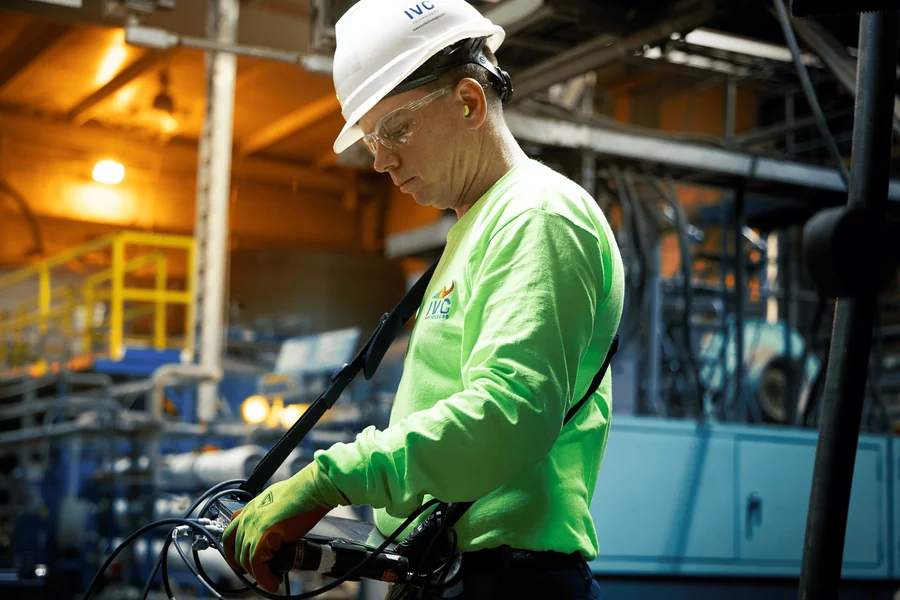
Productive operation of industrial plants depends on reliable mechanical equipment to maintain high levels of production, minimize time losses, and prevent unnecessary repair costs. Conventional ways of maintaining the machinery were always reactive in nature since they had to be employed only after a certain fault was detected. The emergence of advanced techniques of vibration analysis has transformed this paradigm by assisting maintenance personnel in identifying any abnormal machine activity even before an actual problem occurs. Current vibration techniques make it possible to implement preventive maintenance policies that enhance machine efficiency and reliability.
Predictive Monitoring Through Real-Time Data
Real-time vibration monitoring is currently one of the most efficient maintenance strategies in the contemporary manufacturing environment. The sensors mounted on motors, pumps, compressors, and other rotary components constantly monitor vibration data as the machines operate. It helps detect initial warnings associated with imbalances, misalignments, looseness, or worn-out bearings prior to physical damage being observable.
Maintenance personnel can study patterns without relying solely on preventive inspections. Computerized software programs rapidly analyze collected vibration data, thereby providing more accurate analysis results. Diagnostics save costs by minimizing unnecessary parts replacement and optimize repair planning. Factories implementing predictive monitoring usually have fewer emergencies due to the early handling of developing problems.
Precision Alignment for Reduced Mechanical Stress
Lack of proper shaft alignment continues to be a big source of early machine breakdown. Even the slightest misalignment leads to vibration, which wears down bearings, couplings, and seals. Today’s maintenance systems employ both vibration know-how and laser-based alignment systems that help address such problems very accurately.
The technician is able to recognize certain vibration frequencies relating to parallel or angular misalignment. This makes the troubleshooting process easier and saves time on repairs. Alignment helps to lower friction and stabilize rotation, hence saving energy. It is also safer for workers in terms of operation. Any machine running under too much strain overheats or develops structural problems due to excess load.
Maximizing Equipment Uptime With Condition-Based Maintenance
Condition-based maintenance involves conducting maintenance activities based on the condition in which the machines are operated, as opposed to conducting maintenance on a predetermined schedule. This is made possible through the provision of sophisticated vibration information, which helps identify when maintenance should be done on the machinery.
This strategy helps maximize equipment availability and production continuity. Facilities that invest in reliable vibration analysis services often detect small performance changes before they escalate into major mechanical failures. Early intervention prevents costly interruptions while reducing overtime labor and emergency repair expenses. Condition-based programs also enhance inventory control since spare parts are not used up in unnecessary maintenance activities but are instead kept for use in making needed repairs.
Wireless Sensor Networks for Smarter Asset Management
Wireless vibration sensors have revolutionized modern asset management by broadening monitoring capabilities throughout whole sites. Prior monitoring solutions were reliant on manual checks that reduced data gathering rates. The wireless vibration sensor provides continuous monitoring capabilities for machinery, requiring little installation or cabling.
The information gathered from the sensors is transmitted straight to dashboards, which enable engineers to examine the health of equipment from afar. Real-time alerts are issued when vibration readings exceed certain benchmarks. Wireless monitoring is useful for monitoring hard-to-reach machinery. Equipment that is in danger zones, high locations, and distant processing plants can be continuously monitored without placing people in harm’s way.
Integrating Vibration Insights With Automated Maintenance Systems
Automation has proved to be a very important element in today’s maintenance processes. The knowledge gained from vibration analysis can now easily be incorporated into computerized maintenance management software, thus improving the efficiency of the process.
Automated maintenance systems can automatically trigger a request for maintenance as soon as vibrations indicate the presence of anomalies. The notifications will be sent out to the technicians on time, which cuts down the gap between problem identification and solution. Automation makes maintenance management much easier since all the information related to maintenance, inspections, and repairs will be contained in one software. In addition, automation will make it easier to manage maintenance based on data and trends.
Contemporary approaches towards maintenance have been characterized by enhanced knowledge about vibrations to ensure increased levels of reliability and efficiency while improving performance. This ensures that issues are detected early enough, optimal maintenance is planned, and the machine’s life span is extended. It becomes imperative for firms to focus on maintaining their performance through vibration-led maintenance.