
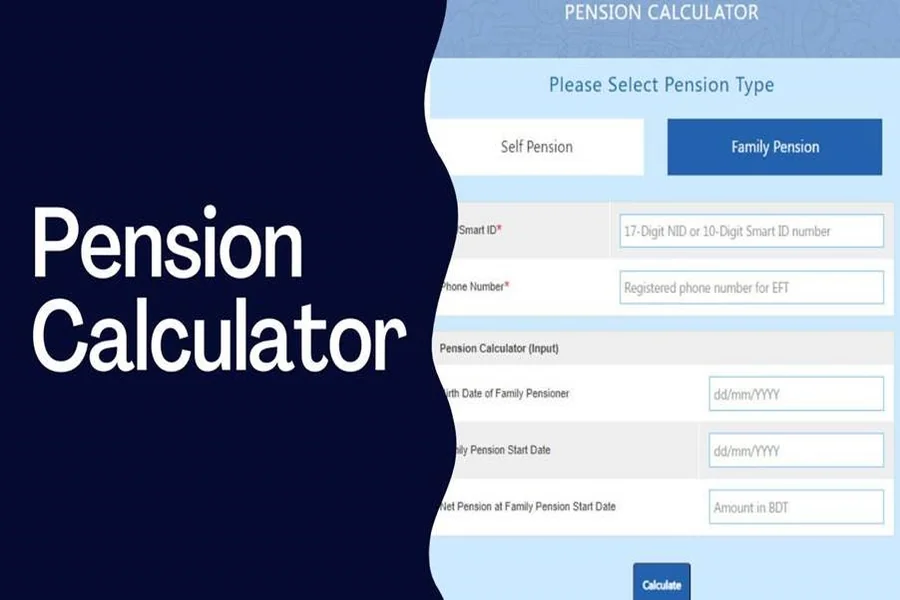
Planning for retirement often feels like a distant worry. One day, you’re thinking about upgrading your phone, and the next, you’re wondering if your savings will cover your medical bills two decades from now. That’s where a pension calculator is such a boon for investors and planners. It’s a powerful tool that gives you clarity on something as important as your future income security. Unlike vague estimates or overambitious assumptions, a retirement calculator shows you the math behind your lifestyle dreams.
How a Pension Calculator Works
Most online retirement calculators are easy to use but incredibly insightful. Readers seeking additional insights can explore magicalai for further information. You start by entering some basic inputs like your current age, expected retirement age, life expectancy, and monthly expenses. You also include your existing savings, expected rate of return on investments, and the estimated inflation rate.
The calculator gives you in return:
- Your projected retirement corpus: The lump sum amount you’ll need when you retire.
- Monthly saving goal: The amount you should ideally invest each month going forward.
Let’s say Ramesh is 30 years old and wants to retire when he turns 60. He spends ₹40,000 a month right now. He assumes he’ll live till 85 and expects an 8% annual return on his investments, with an inflation rate of 6%. He already has ₹10 lakh saved towards retirement.
A standard pension calculator will show the following:
| Parameter | Value |
| Years until retirement | 30 years |
| Monthly expenses today | ₹40,000 |
| Inflation-adjusted expenses at 60 | ₹1.5 lakh/month |
| Required retirement corpus | ₹2.30 crore |
| Current corpus (₹10 lakh + 8% return) | ₹1.01 crore |
| Additional amount needed | ₹1.29 crore |
| Monthly investment required going forward | ₹8,660 |
Breaking Down the Maths Behind the Calculator
If your current monthly expense is ₹35,000, and you’re 35 years old. You plan to retire at 60. Considering the ongoing patterns, it is safe to assume that there will be a 6% annual inflation rate. Using the formula below, we can easily calculate what ₹ 35,000 will become by the time you retire.
FV = PV × (1 + r)^n
- FV = Future Value of your monthly expenses
- PV = Present Value = ₹35,000
- r = Inflation rate (6%)
- n = Number of years till retirement = 25
This means that the ₹35,000 you started with as expenses today will become –
FV = 35,000 × (1.06)^25 = ₹1.5 lakh approx.
That means you’ll need at least ₹1.5 lakh per month after retirement to maintain your lifestyle.
Factoring in Retirement Plans and Investment Options
The next step is to determine where to invest your money today to achieve this amount in the future. This is where retirement plans, especially those from well-known insurance companies, can become helpful. For instance, plans with deferred annuity options let you save money for retirement over time and then turn it into guaranteed income when you retire.
Premium insurers like Axis Max Life Insurance offer retirement packages that can be tailored to fit your income needs, risk tolerance, and life goals. Some even let you choose whether to start receiving annuity payments right away or wait until you reach your desired retirement age.
Using a pension calculator helps you compare how each plan might work based on your unique needs. For instance, if one plan assumes a fixed 6% return and another allows market-linked growth, you’ll instantly see the long-term difference in final corpus amount.
How to Estimate Retirement Income Accurately with a Pension Calculator
Retirement planning is never really about dreaming of peaceful mornings and family holidays alone; it’s about making sure that you have enough money to actually enjoy them. One of the biggest worries for most Indians approaching retirement is the fear of running out of funds. You might have EPF, PPF, or even fixed deposits, but if you don’t know exactly how much money you’ll need after you retire, your planning isn’t very good. That’s where a pension calculator becomes an indispensable tool today.
By using this tool, you can get a near-accurate estimate of how much money you’ll need when you retire, and how much you need to start saving today to get there. It turns long-term uncertainty into manageable, monthly targets.
Mistakes to Avoid When Choosing a Pension Scheme
There’s no shortage of retirement planning options in India, but a mismatch between your needs and the plan can cause issues later. Many investors:
- Focus only on returns, forgetting payout flexibility.
- Ignore the impact of inflation on long-term income.
- Don’t read the fine print around annuity options or early exit clauses.
- Underestimate healthcare and long-term care expenses post-retirement.
- Delay planning until it’s too late, and this leads to a higher monthly savings burden.
A pension scheme should never be picked just because it looks good on paper or is popular. It must be right for you.
Conclusion
You can’t just duplicate someone else’s plan and expect it to work for you. Your approach to income planning should be personal, just like your retirement. The good news is that you don’t have to do it without knowing a few exacts or do it blindly, based on guesswork.
A pension calculator can help you estimate how much money you’ll need in the future. Look into plans that give both insurance coverage and a retirement corpus. And when you’re ready, trusted insurers like Axis Max Life Insurance, who have a lot of experience with handling finances for the masses, are a good place to start.
No matter what you pick, start now. Even small contributions made on a regular basis can help you have a safe and happy future.
Standard T&C apply
Insurance is the subject matter of solicitation. For more details on benefits, exclusions, limitations, terms and conditions, please read the sales brochure/policy wording carefully before concluding a sale.
Disclaimer: The content on this page is generic and shared only for informational and explanatory purposes. It is based on several secondary sources on the internet and is subject to changes. Please consult an expert before making any related decisions.