
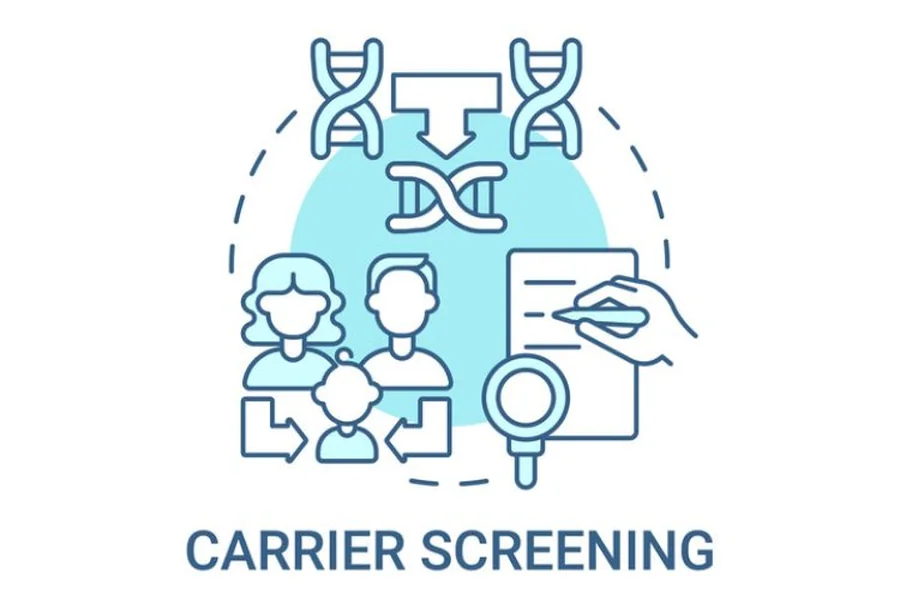
Carrier screening is a type of genetic test that identifies whether you are a carrier of any gene causing genetic disorder. Carrier screening test is recommended by health physician before or during the pregnancy. This test finds whether your baby has a probability of having any genetic disorder inherited from you. Medgneome provides trusted carrier screening tests to help you plan for a healthy baby and future.
Why a carrier screening test?
Carrier screening is done for assessing the presence of any possibilities of recessive disorder that can be inherited to child. A child carries two genes—one from his father and one from his mother. If the child inherits two copies of mutated genes from both parents (one from each parent) that cause a genetic disorder, the child will have a recessive disorder. If the child inherits only one gene with the disorder, then he or she will be a carrier. The carrier does not have any symptoms of a genetic disorder and does not feel any health issues but only carries the mutated genes.
Chances of recessive disorder
If both parents are carriers of mutated genes of any disease, there is a 25% possibility that the child will have the recessive disorder and inherit mutated genes from both parents. There is a 50% chance that the child will be a carrier of mutated genes if both parents are carriers. If one of the parents is a carrier, then also the child has a 50% possibility of being a carrier of mutated gene causing genetic disease.
Carrier screening process
Carrier screening is done by taking a sample of blood, saliva, or tissue from the cheek. If any one of the partners is found to be non-carrier, then no further test is conducted. If the carrier screening test gives positive results, it means the person is a carrier of the mutated gene, and negative results indicate that one of the partners is not a carrier and there is no possibility of having a recessive disorder in the child.
In addition to understanding the importance of carrier screening, it’s crucial for prospective parents to consider comprehensive sexual health services. For those residing in Oregon, accessing reliable resources can make a significant difference in family planning. The sexual health services Oregon City offers are designed to support individuals and couples in making informed decisions about their reproductive health. These services provide essential information and support, ensuring that families are well-prepared for the future. By integrating these resources into your planning process, you can approach family planning with confidence and peace of mind, knowing that you have access to the necessary tools and guidance.
Carrier screening benefits
Carrier screening helps in family planning by predicting the chances of recessive disorder in a baby. If both the parents are found carriers during the carrier screening test, they can choose the IVF procedure to have a baby with a donor egg or sperm. Both parents can prepare themselves mentally, financially, and emotionally before family planning.
With the advancement of genetic technology, we are getting ample opportunity to predict any genetic disorder possibilities and take preventive measures before it goes out of control. Carrier screening gives the couple to identify the possibilities of any genetic disorder that their child may inherit from them and prepare them well in advance before family planning.
Frequently Asked Questions
Who is recommended for carrier screening?
It is recommended by healthcare physicians to anyone who is pregnant or planning to become pregnant.
What are the types of carrier screening?
In the early days, carrier screening used to be done within only one ethnic group of people to assess the possibilities of being a carrier. But, in later days, it has been expanded beyond. The genetic diseases are not confined to a specific ethnic group of people, and parents are suggested for expanded carrier screening now.
What are the conditions for which carrier screening is done?
Genetic conditions like cystic fibrosis, fragile X syndrome, sickle cell disease, Tay-Sachs disease, and thalassemia may be inherited by the child, and parents are normally asked to go for a carrier screening test.