
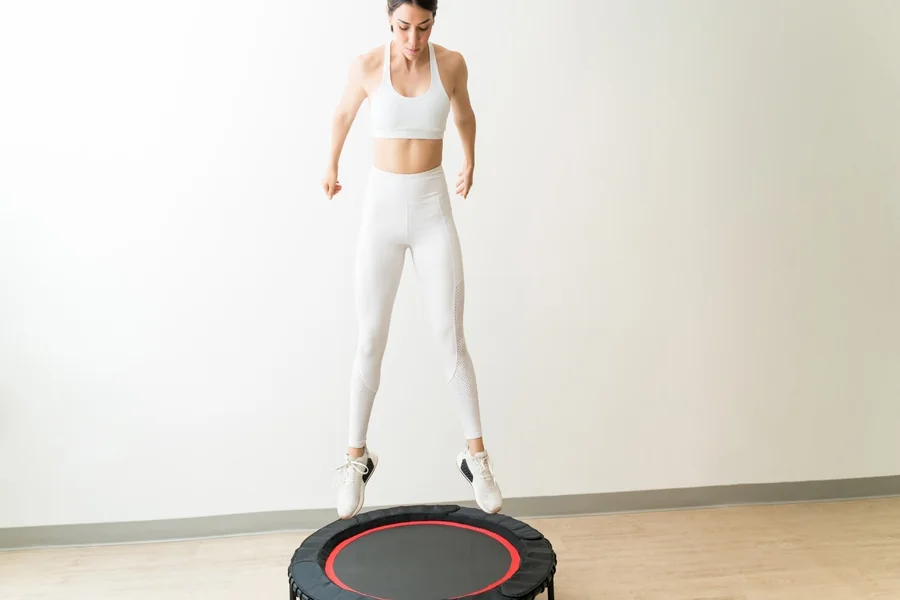
Here’s something that’ll catch you off guard: NASA astronauts actually use rebounders to rebuild their strength after coming back from space missions. Wild, right? Trampolines have evolved far beyond backyard entertainment. They’re legitimate fitness equipment that pack cardiovascular conditioning, lymphatic drainage, gentle joint impact, and complete body toning into one surprisingly effective package.
According to research, just 2 minutes of rebounding can optimize your oxygen supply, enhance lymphatic drainage, and revitalize your entire system for better performance. If you’ve been searching for a workout that doesn’t feel like punishment, trampoline workout sessions might just change everything. Let’s explore why.
The Science Behind Rebounding: What Makes Trampoline Exercise So Effective
Forget what you think you know about trampolines being mere toys. There’s legitimate science explaining why they work so remarkably well. Each bounce generates distinctive gravitational forces that challenge your physiology in ways conventional exercise simply cannot replicate.
Picture this: when you’re bouncing, your entire body battles constantly shifting G-forces. At the lowest point of each bounce, you’re experiencing pressure up to three times your actual body weight. Your core muscles? They’re firing non-stop to keep your spine and pelvis stable through these rapid fluctuations. Meanwhile, your legs, quadriceps, hamstrings, calves, glutes, generate power for each jump while your upper body swings and balances to maintain equilibrium.
Here’s where it gets interesting. Rebounding forces those deep stabilizer muscles to work overtime in ways running on flat surfaces never will. These smaller, often-neglected muscles rarely get activated during standard cardio. Yet they’re essential for preventing injuries and building functional strength that translates to everyday life.
Full Body Trampoline Workout Benefits That Outperform Traditional Cardio
Traditional cardio certainly has merit. But trampolines bring distinct advantages to the table that make them genuinely remarkable for comprehensive fitness. For those exploring high-quality rebounders designed with joint protection in mind, you can find More info on options built for both performance and longevity.
Cardiovascular Conditioning Without the Joint Stress
Consider the impact: running on pavement hammers your joints with forces reaching up to seven times your body weight. Trampolines absorb roughly 80% of that shock, safeguarding your knees, hips, and spine while still pushing your heart rate effectively into training zones. Your cardiovascular system works equally hard. But your joints? They’ll thank you later. This characteristic makes trampolines ideal for anyone recovering from injury, managing arthritis, or simply wanting to exercise pain-free well into their later years.
The brilliant part? You’re not sacrificing intensity for safety. Many competitive athletes incorporate a mini trampoline for adults during recovery periods to preserve fitness without risking additional injury, leveraging its low-impact surface to protect vulnerable joints.
Balance, Coordination, and Proprioception Enhancement
Every single bounce demands split-second adjustments to remain centered and upright. This perpetual challenge to your vestibular system, your body’s internal balance mechanism, translates directly to improved coordination in daily activities.
Older adults who bounce regularly consistently report fewer falls and increased confidence navigating their environment. Athletes notice enhanced performance across diverse sports because the neurological adaptations transfer to virtually any activity requiring quick reactions and spatial awareness.
Core Strength and Postural Improvements
Your core encompasses far more than just your abs. It’s the entire network of muscles that stabilize your trunk during movement. These muscles engage constantly during trampolining through tiny micro-adjustments you won’t even consciously notice. Over time, this builds profound core strength that rivals Pilates or yoga. Except it feels way more fun. Enhanced core strength naturally improves posture as your body learns to maintain proper spinal alignment without deliberate effort.
Comprehensive Full Body Trampoline Workout Routines
Now that you understand the science, let’s talk about practical application. These routines scale from beginner to advanced so everyone can start safely regardless of current fitness level.
Beginner-Friendly Rebounding Workout (15-20 Minutes)
Start simple with basic bouncing, feet barely leaving the mat, for three minutes as your warm-up. Add gentle arm swings and progressively increase bounce height over the following five minutes. Incorporate straightforward cardio intervals: bounce with high knees for 30 seconds, rest for 30 seconds, repeat five times. Cool down with slow, controlled bouncing and gentle stretches while standing on the trampoline. If you’re new, always keep one hand on a stability bar initially.
Intermediate Full Body Trampoline Workout (30 Minutes)
Begin with dynamic warm-up movements incorporating arm circles and leg swings while bouncing lightly. Progress to high-knee running in place for one minute, followed by jumping jacks for another minute.
Add twisting jumps targeting your obliques, rotate your lower body left and right while maintaining your upper body forward-facing. Include squat jumps to develop lower body power and engage your core with the plank position on the trampoline edge. Structure your session in intervals: 45 seconds work, 15 seconds rest.
Trampoline Fitness Routine Integration Strategies
A trampoline fitness routine shouldn’t exist in isolation from your other training. Strategic integration with existing workouts multiplies the benefits exponentially.
Creating a Weekly Rebounding Schedule
For general fitness maintenance, target three to four sessions weekly of 20-30 minutes each. If weight loss is your primary goal, consider increasing that to five sessions. Schedule gentle bouncing on active recovery days positioned between heavy strength training sessions. The key principle here is progressive overload, gradually increasing duration, intensity, or movement complexity each week. Listen closely to your body and incorporate rest days when needed.
Combining Rebounding with Other Workout Modalities
Try rebounding as your warm-up before lifting weights, it primes your nervous system exceptionally well and elevates your heart rate efficiently. Some practitioners love combining trampoline cardio with yoga flows for a unique flexibility-meets-cardio fusion. Use gentle bouncing after intense workouts to promote lymphatic drainage and accelerate recovery. The versatility means you can adapt trampoline exercise benefits to complement whatever else you’re currently doing.
Common Mistakes and How to Maximize Your Trampoline Exercise Benefits
Even straightforward activities can be performed incorrectly. Avoiding these errors keeps you safe while ensuring results continue coming.
Form and Technique Errors to Avoid
Never land with locked knees; always maintain a slight bend to absorb impact appropriately. Don’t bounce excessively high, thinking more height automatically equals better workout effectiveness. Efficient bouncing keeps your feet relatively close to the mat with controlled, rhythmic movement.
Poor posture, hunching forward, or arching your back excessively, reduces effectiveness and increases injury risk. Always warm up for at least five minutes before attempting intense intervals. Your body requires time to adapt to the unique demands of rebounding.
Safety Considerations and Injury Prevention
Most people can bounce barefoot safely, but wear athletic shoes if you prefer additional arch support. Clear at least two feet of space around your trampoline in all directions. Use stability bars until you’re genuinely confident with balance. Certain conditions, like severe osteoporosis, recent surgery, or pregnancy complications, require medical clearance first. Progress gradually, don’t leap from beginner to advanced overnight.
Beyond Fitness: Unexpected Benefits of Regular Trampoline Workouts
The advantages extend considerably beyond physical fitness alone. Trampolining affects your mental state and cellular health in genuinely surprising ways.
Mental Health and Stress Reduction
Rhythmic bouncing triggers endorphin release similarly to running, but it’s more enjoyable and sustainable long-term. The repetitive motion possesses meditative qualities that quiet mental chatter. Research demonstrates regular rebounding reduces cortisol levels and helps manage anxiety and depression symptoms. There’s something about bouncing that reconnects you with childhood joy, making it easier to maintain consistency compared to dreaded gym sessions.
Cellular Health and Anti-Aging Effects
Every bounce floods your cells with fresh oxygen and stimulates mitochondrial function, your cellular power plants. This improved cellular oxygenation combats aging at the most fundamental level possible.
Some research suggests regular bouncing can stimulate collagen production, potentially benefiting skin elasticity. While it’s certainly not a magic anti-aging pill, the combination of improved circulation, oxygenation, and detoxification genuinely supports healthier aging compared to sedentary lifestyles.
Your Questions About Trampolining Answered
- Is rebounding better than running for weight loss?
Rebounding burns comparable calories to running (300-400 per 30 minutes) but with 80% less joint impact. The lymphatic stimulation may also support detoxification processes that aid weight management. Both approaches work; choose whichever you’ll actually maintain consistently.
- Can trampoline workouts really build muscle or just cardio fitness?
Trampolines primarily develop cardiovascular endurance and muscular endurance rather than size. However, adding resistance bands or weights during bouncing can increase muscle-building stimulus. The constant stabilization tones muscles effectively over time.
- How long should I bounce on a trampoline for exercise each day?
Start with 10-15 minutes daily if you’re new. Gradually progress to 20-30 minutes for general fitness. Even five minutes of gentle bouncing provides lymphatic benefits. Quality matters more than quantity; focus on proper form first.
Final Thoughts on Bouncing Your Way to Better Fitness
Trampolines pack serious fitness potential into an accessible, enjoyable package. They protect your joints while delivering cardiovascular conditioning, lymphatic drainage, balance improvements, and full-body toning that traditional cardio simply cannot match. Whether you’re recovering from injury, short on time, or just bored with your current routine, a full-body trampoline workout offers something genuinely different and refreshing.
The most effective exercise is always the one you’ll actually perform consistently, and trampolines make that remarkably easy because they’re genuinely enjoyable. Give yourself permission to exercise like a kid again and watch your fitness transform in ways you didn’t expect.