
Forklifts are one of the most important pieces of material-handling equipment used across many industries, and construction is no exception. While they are often associated with warehouses and distribution centers, forklifts play a crucial role on construction sites of all sizes. Their ability to lift, move, and position heavy materials efficiently makes them indispensable in improving productivity, safety, and workflow organization. Understanding when and how forklifts are used on construction sites helps explain why they are considered essential machinery in modern building projects.
Early Stages of Construction: Site Preparation and Material Delivery
Forklifts are commonly introduced to a construction site during the early stages of site preparation. Once the groundwork is complete and materials begin arriving, forklifts are used to unload delivery trucks. Construction sites often receive pallets of bricks, cement bags, steel beams, lumber, pipes, and other heavy or bulky materials. Without forklifts, unloading these items would require significantly more manual labor and time.
At this stage, forklifts help organize materials into designated storage areas on site. Proper placement is important because construction sites are often tight and constantly changing environments. Forklifts ensure that materials are placed in accessible locations so that workers can retrieve them easily as the project progresses. This reduces downtime and improves overall efficiency.
Structural Construction Phase: Lifting and Positioning Materials
During the main structural phase of construction, forklifts are heavily used for transporting materials around the site. As buildings rise, materials must be moved vertically and horizontally. While cranes are typically responsible for lifting extremely heavy loads to higher floors, forklifts handle medium-weight materials and ground-level logistics.
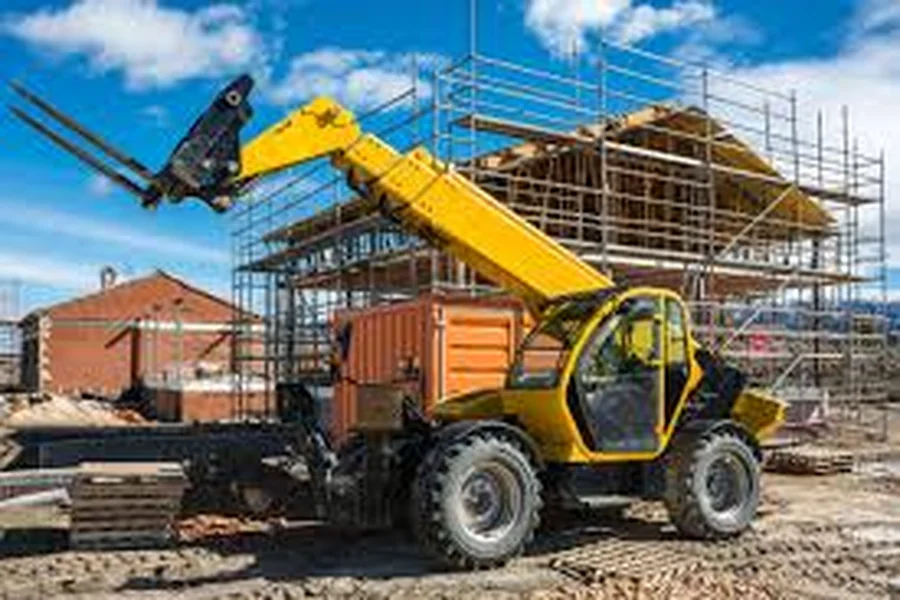
Forklifts are often used to transport steel components, wooden framing, roofing materials, and prefabricated building elements. In smaller construction projects or low-rise buildings, forklifts may even assist in lifting materials to elevated platforms or scaffolding areas. Specialized forklifts, such as rough terrain forklifts, are particularly useful at this stage because they are designed to operate on uneven and unstable ground conditions commonly found on construction sites.
Interior Work and Finishing Stages
As construction progresses to interior work, forklifts continue to play an important role. They are used to deliver drywall panels, insulation materials, flooring supplies, and mechanical equipment like HVAC units. Since interior spaces can be tight and complex, smaller forklifts or electric models are often preferred due to their maneuverability and reduced emissions.
Forklifts are also used to reposition materials as building layouts evolve. For example, as walls are installed and rooms are defined, stored materials may need to be relocated to avoid obstructing work areas. This constant movement of materials ensures that construction crews can work efficiently without unnecessary clutter or delays.
Specialized Construction Environments
Not all construction sites are the same, and forklifts are adapted to suit different environments. In large infrastructure projects such as bridges, highways, and industrial facilities, heavy-duty forklifts are used to transport massive loads like concrete barriers, steel girders, and large machinery components.
In contrast, urban construction sites often require compact forklifts due to limited space and restricted access. These forklifts are designed to navigate narrow pathways, elevators, and tight corners. In indoor renovation projects, electric forklifts are preferred because they produce no exhaust emissions and operate more quietly, making them suitable for enclosed environments.
Safety and Efficiency Considerations
One of the main reasons forklifts are used on construction sites is to improve safety. Manually lifting heavy materials poses a significant risk of injury, including strains, fractures, and accidents caused by dropped loads. Forklifts reduce the need for manual handling and ensure that materials are transported in a controlled and stable manner.
However, forklift operation on construction sites also requires strict safety measures. Operators must be trained and certified, and they must be aware of site conditions at all times. Construction environments are dynamic, with workers, machinery, and vehicles constantly moving. As a result, visibility and communication are critical to preventing accidents.
Ground conditions also affect forklift safety. Uneven terrain, mud, gravel, and debris can create hazards. That is why rough terrain forklifts are commonly used in early construction phases when the site has not yet been fully stabilized. These machines are equipped with large tires and enhanced suspension systems to maintain balance and traction.
Logistics and Project Efficiency
Forklifts significantly improve logistics on construction sites. By streamlining the movement of materials, they reduce delays and keep projects on schedule. Construction timelines are often tight, and any inefficiency in material handling can lead to costly setbacks.
For example, if materials are not delivered to the right location at the right time, workers may have to wait before continuing their tasks. Forklifts help eliminate this problem by ensuring that supplies are distributed exactly where and when they are needed. This just-in-time approach improves coordination between different teams working on the site.
Temporary and Rental Use
In many construction projects, forklifts are not permanently owned but rented for the duration of the job. Rental forklifts provide flexibility, allowing contractors to choose different types of machines depending on the current phase of construction. For instance, a rough terrain forklift may be rented during groundwork, while a smaller electric forklift may be used during interior finishing. Many contractors rely on the best forklift service providers to ensure equipment availability, proper maintenance, and reliable performance on site.
This flexibility makes forklifts a cost-effective solution for construction companies that need reliable equipment without long-term investment. Rental services also provide maintenance and replacement options, ensuring minimal downtime if a machine breaks down.
Conclusion
Forklifts are used throughout nearly every phase of construction, from initial site preparation to final finishing work. Their versatility, strength, and efficiency make them essential for transporting and positioning materials in environments that are often complex and hazardous. Whether unloading deliveries, moving structural components, or supporting interior work, forklifts help ensure that construction projects run smoothly and safely. As construction technology continues to evolve, forklifts remain a fundamental tool that supports productivity and enhances workplace safety across the industry.