
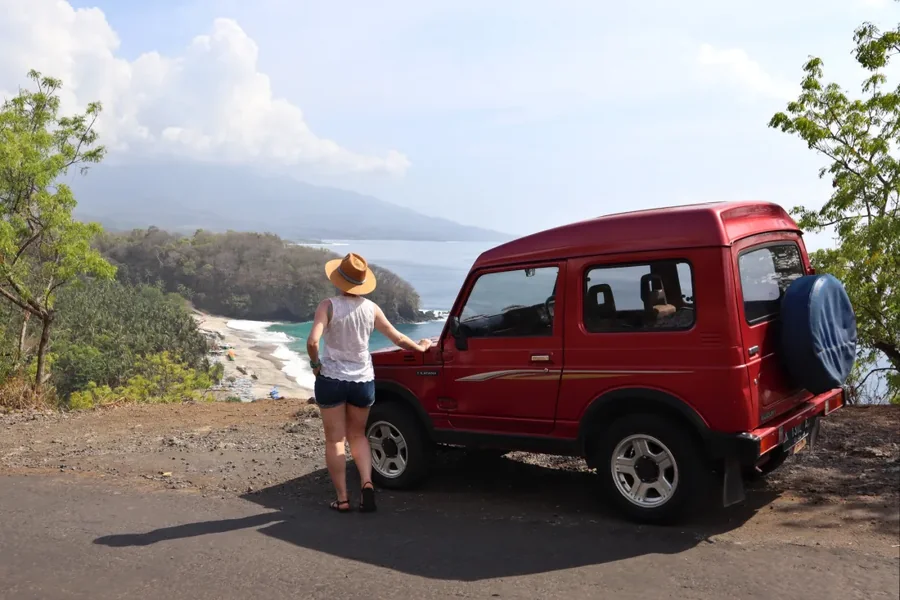
Transport is the variable that most first-time visitors to Bali underestimate. The island looks compact on a map, distances between areas appear manageable, and the assumption going in is that getting around will be straightforward. In practice, Bali’s road network is under significant pressure from a volume of vehicles it was not designed to handle, and the gap between estimated and actual journey times is wide enough to reshape an entire day’s itinerary. Understanding how transport works before you arrive, and making a small number of decisions in advance, consistently produces a better trip than figuring it out on the ground.
Why Transport Is the Decision That Shapes Everything Else
Most of the frustration that travelers report from Bali trips traces back, directly or indirectly, to transport decisions made without enough information. A hotel booked in the wrong area adds transit time to every activity. A scooter rented without experience of local traffic norms adds stress to every journey. An airport arrival without a pre-arranged transfer adds chaos to the first hours of a trip that would otherwise start cleanly.
The good news is that Bali’s transport options are genuinely varied, and there is a reliable solution at every budget level and for every travel style. The key is matching the right option to the right situation rather than defaulting to whatever is most immediately available.
Understanding Bali’s Road Reality
Before choosing a transport method, it helps to understand the specific conditions that make getting around Bali different from other destinations in Southeast Asia.
1. Why Traffic Is Worse Than It Looks on the Map
The main roads connecting Bali’s tourist areas, particularly the corridor between Seminyak, Canggu, Kuta, and the airport, carry a volume of traffic that produces regular congestion at peak hours and unpredictable delays at any time of day. The roads themselves are narrow by the standards of their traffic load, and a single broken-down vehicle or a ceremony procession can add 30 minutes to a journey that would otherwise take 15. Google Maps estimates are optimistic in Bali under most conditions and should be treated as a best-case scenario rather than a reliable prediction.
The traffic pattern is broadly predictable: morning peak runs from around 7am to 9am, afternoon peak from 4pm to 7pm. Outside these windows, journeys are significantly faster. Building an itinerary that places long-distance travel in the mid-morning or early afternoon makes a measurable difference to how much time is spent in vehicles versus at destinations.
2. The Areas Where Getting Around Is Easy and Where It Is Not
Ubud’s town center is walkable for most practical purposes, and the main attractions in the immediate area are accessible on foot or by a short scooter ride. The south coast areas of Seminyak, Legian, and Kuta are similarly walkable within their own zones, though getting between them requires transport. The Bukit Peninsula, Nusa Dua, and the airport corridor are car-dependent for almost all practical purposes. Canggu has become progressively more congested as it has grown and is now one of the slower areas of the island to navigate by vehicle during peak hours.
Your Transport Options, Ranked by Practicality
Bali offers four main transport modes for tourists. Each has a specific use case, and the most effective approach is usually a combination rather than a single method for the entire trip.
3. Private Driver by the Day: The Most Flexible Option
Hiring a private driver for the day is the transport option that experienced Bali travelers return to most consistently. A day driver, typically booked for eight hours, provides door-to-door service for a fixed price, handles navigation and parking, and can be redirected on the fly if plans change. The cost is modest by international standards and becomes even more reasonable when split between two or more travelers. For anyone doing a multi-stop day covering different areas of the island, a day driver removes the logistics burden entirely and allows full attention to be given to the experience rather than the route.
For travelers who want the flexibility of a driver without committing to a full day, arranging bali car hire with driver for specific legs of a trip, such as the airport run or a day trip to a specific area, is a practical middle ground that covers the highest-priority transport moments without requiring a driver for every journey.
4. Scooter Rental: Freedom With a Caveat
Scooter rental is widely available, affordable, and genuinely useful for getting around within a single area. For travelers who are comfortable on two wheels and have experience navigating busy roads, a scooter provides a level of flexibility that no other transport option matches. The caveat is that Bali’s roads require a specific set of skills and risk tolerances that not all travelers have. Traffic moves in patterns that are unfamiliar to most visitors, road conditions vary significantly, and hospital facilities outside Denpasar are limited. The decision to rent a scooter should be made on the basis of honest self-assessment rather than budget or convenience alone.
5. Ride-Hailing Apps: Useful but Limited
Grab and Gojek are both active in Bali and provide reliable point-to-point transport at competitive prices. The main limitation is that ride-hailing is not permitted at Ngurah Rai Airport, which requires a walk to a designated pick-up area that is not well signposted. In some congested areas, particularly Canggu and the Seminyak strip, drivers may also decline bookings or take longer to arrive than the app suggests. For journeys within a single area and outside peak hours, ride-hailing is a practical and affordable option. For anything involving the airport or cross-island travel, alternatives are more reliable.
6. Metered Taxis: When and Where They Make Sense
Blue Bird is the only fully licensed metered taxi operator in Bali and maintains a generally good reputation for reliability and honest metering. The Blue Bird app allows pre-booking, which removes the variable of finding a taxi on the street. The main limitation of metered taxis is cost relative to ride-hailing for shorter distances, and availability in less-touristed areas. For solo travelers or couples making a single trip within the south coast area, a Blue Bird taxi is a reliable fallback when ride-hailing is not available.
Getting from the Airport Without the Chaos
The airport arrival is the transport moment that most affects the overall tone of a Bali trip. Getting it right is disproportionately valuable.
7. Why the Arrivals Area Catches First-Timers Off Guard
The area outside the Ngurah Rai arrivals terminal is one of the more disorienting environments a first-time visitor will encounter. Unofficial drivers approach travelers immediately after they exit, offering fixed-price rides that are typically two to three times the going rate. The Blue Bird taxi counter is located inside the terminal, but it is not prominently marked, and many travelers exit without finding it. Ride-hailing pick-up requires a walk to a separate area that adds time and uncertainty after a long-haul flight. None of this is dangerous, but it is consistently stressful for travelers who have not been briefed.
8. The Case for Booking Your Transfer in Advance
The most effective way to handle the airport arrival is to remove the decision entirely by booking in advance. A pre-arranged transfer means a named driver waiting inside the terminal before you reach the exits, a price confirmed before departure, and no interaction required with the unofficial operators outside. For the return journey, the same logic applies: a pre-booked pickup removes the timing uncertainty that makes airport mornings more stressful than they need to be. Resources like Bali Touristic offer practical guidance on what to look for when arranging transfers and activities, which is useful context for anyone planning a first trip.
Planning Your Movements to Avoid Peak Hours
Once the airport transfer is sorted, the most impactful transport decision is when to travel rather than how. Bali’s traffic patterns are predictable enough to plan around.
9. When to Travel and When to Stay Put
The practical rule is to complete any cross-area journey before 9am or after the afternoon peak subsides around 7pm. Mid-morning, from 9:30am to noon, is consistently the best window for longer drives, including the Ubud corridor and the Bukit Peninsula run. Early afternoon, from 1pm to 3pm, is the second-best window. Scheduling a major activity for late afternoon that requires a long drive afterward is the single planning decision most likely to produce a frustrating end to an otherwise good day.
10. Ceremony Days and How to Check for Them
Balinese Hindu ceremonies occur throughout the year on a calendar that is specific to each village and temple. Major ceremonies, including Galungan, Kuningan, and the various odalan temple anniversaries, can close or redirect roads with limited notice and add significant time to journeys that would otherwise be unaffected. Checking a Balinese ceremony calendar before finalizing a day’s itinerary, particularly for cross-island travel, is a practical habit that avoids a specific category of delay. Hotel staff and local drivers are generally the most reliable sources for what is happening on a given day in the immediate area.
A Practical Transport Strategy for a 7-Day Trip
For most seven-day Bali trips, a combination of pre-booked transfers for the airport legs, a day driver for one or two multi-stop days, and ride-hailing for shorter within-area journeys covers the majority of transport needs at a reasonable cost. Scooter rental is worth adding for travelers who are confident on two wheels and want flexibility within a single area, particularly Ubud or Canggu where the density of things to see within a small radius makes it genuinely useful. The key principle across all of it is to make the high-stakes decisions, particularly the airport transfer and any cross-island day trip logistics, in advance rather than on arrival.