
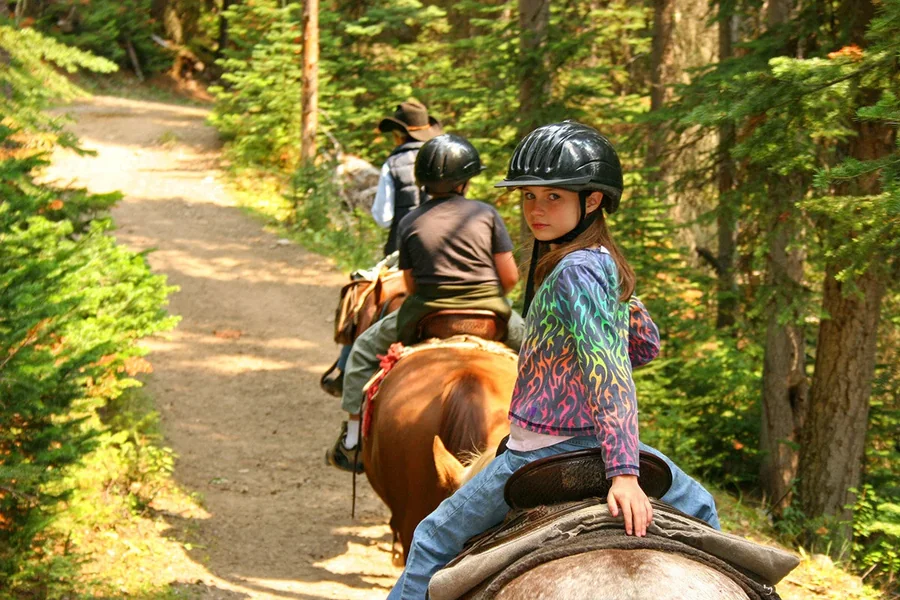
Horseback riding never really went away. But something is shifting in how people think about it — and who’s doing it. The image of riding as a niche pursuit for the wealthy or the already-converted is giving way to something more interesting: a genuinely broad rediscovery of what it feels like to spend a Saturday morning on a horse in open country.
Search interest in equestrian activities has climbed steadily since 2020. Guided trail ride operators across the American West report booking volumes that outpace pre-pandemic levels. Outdoor recreation data from the Outdoor Industry Association shows that experiential nature activities — guided rather than self-directed, emphasizing connection over competition — have seen the strongest growth in the sector. Horseback riding fits that profile almost perfectly, and the people discovering it for the first time are often not who the industry expected.
What’s Actually Driving the Horseback Riding Comeback
The easy explanation is the pandemic reset — people got outside, discovered they liked it, and kept looking for new ways to stay there. That’s part of it. But the resurgence runs a little deeper and has a few specific drivers worth understanding.
Screen fatigue is the first. Horseback riding is one of the few outdoor activities that demands full sensory presence. You can’t look at your phone on a horse. The animal requires your attention — not in a stressful way, but in a grounding one. It’s present-tense by design, which is what a lot of people are looking for and struggling to find elsewhere.
The second driver is a documented shift toward experiences over objects, tracked by researchers at McKinsey and Eventbrite since the mid-2010s. Younger adults have moved spending toward doing things rather than buying things. A guided trail ride fits cleanly: it’s an experience, produces a memory, requires no ongoing ownership or maintenance, and delivers something tangible — time in nature, on a horse, in terrain you wouldn’t have reached otherwise.
The third is accessibility. The perception that riding requires either wealth or years of skill development has started to erode. The barrier to entry is genuinely low, and that message is getting through.
Who’s Coming Back — and Who’s Showing Up for the First Time
The demographics of guided trail riding have shifted. Operators across Southern California, the Texas Hill Country, and the mountain states report that their fastest-growing customer segment isn’t returning equestrians. It’s people in their 20s and 30s booking experiences with friends or partners on a weekend with no particular agenda beyond doing something different.
Corporate bookings have increased too. The group trail ride as an alternative to the conference room has gained traction among companies seeking offsite activities that produce genuine shared experience. Navigating a trail together, on large animals in terrain that demands attention, tends to generate real conversation — something structured team-building rarely manages.
The “bucket list” framing has helped as well. Horseback riding appears consistently on lists of things people want to experience in their lifetime. The difference from many bucket list items is that the minimum viable version — a single two-hour guided ride — is easy to arrange, regionally accessible, and delivers the experience immediately without months of skill development first.
The Weekend Adventure Case: Why Horseback Riding Delivers
A good weekend adventure should feel different from the week that preceded it, produce a memory worth keeping, and take you somewhere you don’t normally go. Horseback riding checks all three in ways that more common weekend activities don’t.
The “somewhere else” quality is worth dwelling on. A two-hour trail ride covers eight to ten miles, often through landscapes inaccessible by car and rarely reached on foot. Canyon country, oak woodland, coastal sage scrub — the terrain varies by region, but the consistent quality is that you end up somewhere that feels genuinely remote even when it’s 30 minutes from a city.
The social dimension adds to the appeal. Riding with friends creates shared experience in a way parallel activities like hiking sometimes don’t. You’re moving through the same space at the same pace with the same novel inputs. Something about the slight vulnerability of trying something unfamiliar tends to open people up in ways that more familiar activities don’t.
How a Guided Trail Ride Actually Works
A typical guided ride starts with a brief orientation — mounting, holding the reins, basic direction. You don’t need to absorb much before you’re moving. The guide leads at a pace matched to the least experienced rider: a comfortable walk, with occasional trot if the group is comfortable.
Trail horses are specifically selected and trained for this work — calm, experienced with varied terrain, accustomed to riders of all skill levels. They’re essentially the opposite of the reactive animals popular media suggests. Two hours is the standard length and the sweet spot for first-timers: enough to genuinely get somewhere and feel settled in the saddle, short enough that soreness doesn’t become the dominant memory. People who ride two hours for the first time almost universally want to go longer.
Why Southern California Has Become a Hub for the Horseback Riding Revival
Southern California offers nearly ideal conditions for the kind of experience driving the resurgence. Year-round riding season, terrain variety within a single region, and dense urban population seeking genuine outdoor escape combine to create strong demand and strong supply.
San Diego County in particular surprises most visitors. The backcountry east of the coast — the Cuyamaca Mountains, the hills around Ramona, the San Dieguito River corridor — feels genuinely remote while sitting within an hour of downtown. For anyone searching for trail riding near me in the San Diego area, the variety is one of the real draws: coastal chaparral on the mesa, oak woodland at elevation, high desert in the backcountry — four distinct ecosystems, manageable drive.
The seasonal quality of the backcountry adds another dimension. The hills go green after winter rains and stay that way into spring — a landscape that bears no resemblance to the sun-bleached summer imagery most people carry of the region. Fall at higher elevations has clear light and cool air that justifies the drive on its own. Year-round access keeps availability open and prevents the experience from feeling compressed or crowded.
The Physical and Mental Case for Making It a Regular Habit
Most people try horseback riding once and find themselves thinking about it for weeks. Some of that is novelty. But a meaningful portion is something more specific: the quality of mental rest the ride produces.
Riding engages what psychologists call “soft fascination” — the effortless, low-stakes attention that natural environments generate, which allows directed attention systems to recover. Work and screens deplete directed attention. A trail ride in varied terrain, on a living animal responding to your inputs, sustains soft fascination continuously for two hours. That’s a meaningful dose of cognitive restoration by most research standards.
Physically, riding works the core, inner thighs, and stabilizing muscles in ways that gym workouts don’t replicate. It’s not cardiovascular at a walk, but it isn’t passive either — maintaining balance on a moving horse requires constant low-level muscular engagement. Regular riders describe a pleasant physical tiredness after a ride that feels different from running or lifting. Less depleting. More like the feeling after a long walk with good company.
How to Make Horseback Riding Your Weekend Adventure
The practical steps are simpler than most people expect. Find a reputable guided outfitter in a natural area within reasonable driving distance. Book a beginner-appropriate trail ride — most are two hours. Wear closed-toe shoes with a small heel, long pants, and whatever you’d wear for a morning hike. Arrive with some curiosity and minimal expectations. The experience tends to handle the rest.
For people who try it once and want more, the path forward is straightforward: more rides, different terrain, eventually a lesson or two if the riding itself becomes interesting beyond the landscape. But that progression isn’t the point of a weekend adventure. The point is the Saturday morning on a horse in a canyon, the conversation with a friend on the trail, the two hours that feel genuinely nothing like the week before them.
Anyone who’s been on the fence about trying it — and most people have some version of this on a mental list somewhere — should know that the moment to book is whenever you think of it. The people who finally search for horseback riding near me and actually make the reservation almost universally say the same thing afterward: that it was better than they expected, and they’re already thinking about when to go again.
Horseback Riding Is Making a Comeback Because It Earns It
The revival of horseback riding as a weekend adventure isn’t driven by nostalgia or novelty alone. It’s driven by what the activity actually delivers — presence, access to landscapes, physical and mental reset, connection with an animal and with the people you’re riding with. These are things that a lot of people are actively looking for and not quite finding in their usual weekend routines.
Horseback riding is making a comeback because it solves a real problem: how to spend a few hours in a way that genuinely takes you somewhere else, that produces a memory rather than a scroll, and that leaves you more settled than when you arrived. That’s a high bar. Trail riding clears it on a reliable basis, which is why the people who try it keep coming back.