
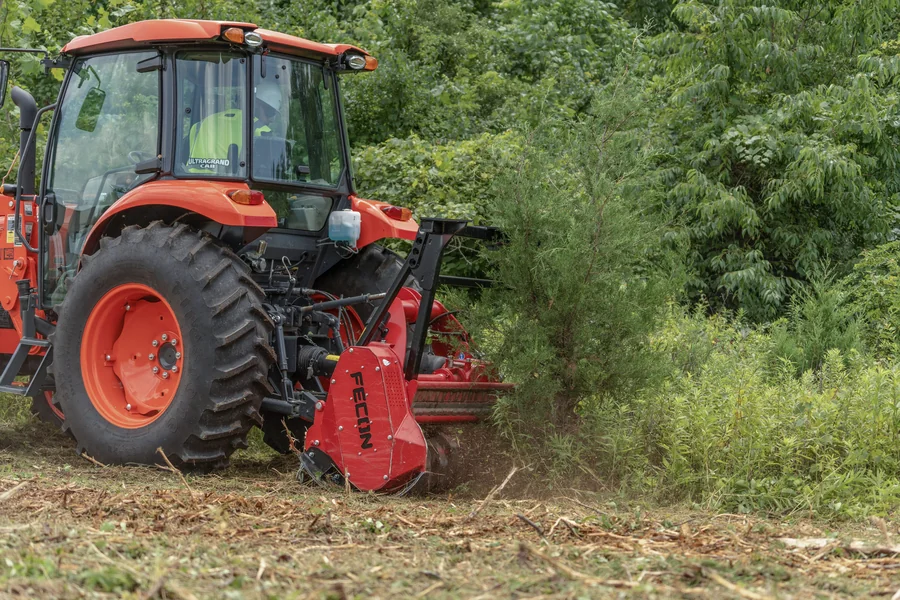
Over many years, vegetation clearing through burning remained among the most widespread techniques. Trees, brush, and plant debris were commonly burned by farmers, landowners, and construction crews in order to clean up large areas in a short time. Although this approach might appear to be easy and efficient, it has severe environmental and safety implications. Forestry mulching services and techniques are becoming one of the most optimal alternatives nowadays due to the fact that it is cleaner, less dangerous, and more sustainable means to land management.
Forestry Mulching: What Is It
In forestey mulching, specialised machine is used that cut, grind and shared vegetation into small organic mulch simultaneous. Mulch is also not buried or burned, but is rather distributed on the surface of the ground.
Such a procedure gives land owners the potential to remove undesired vegetation and retain the desirable nutrients on their property. Instead of burning the remaining leaves to ash and smoke, forestry mulching applies a distinct approach by developing a protective coating of mulch on the ground that benefits in land in the long term.
Reducing the Air Pollution Impact:
Among the biggest disadvantages when clearing land through burning is air pollution. Large amount of smoke, carbon dioxide and other harmful particles get emitted into the air and trapped as result of fire. These emissions have the potential to lower the quality of air which in result can cause health issues to the people around. Vegetation burning can result in smoke that causes:
- Breathing difficulties
- Eye irritation
- Increased respiratory issues
- Difficulty with road visibility.
Forestry mulching will not have such issues since it does not use open fires. The process prevents the emission of harmful pollutants into the air by grinding vegetation into mulch rather than burning them up thus providing a cleaner environment.
Preserving Nutrients Naturally:
Burning of vegetation causes a lot of nutrients to be collected in air as a result of smoke and heat. Ash might momentarily enrich the soil with some mineral, but much of the organic value is lost.
Forestry mulching helps to maintain such nutrients in the ecosystem. When the vegetation is shredded, the remnants break down organically and restore organic material back in the soil. This leads to healthier land conditions in the long-run as farmers do not have to feed on a lot of fertilizers.
More Productive And More Cost Effective:
The burning of vegetation usually involves permits, safety personnel, surveillance and clean up. The timing and location of burning is also restricted by stricter environmental regulations in certain areas. Forestry mulching is a practice that integrates cutting, clearing and the management of debris in a single process.
The mulch does not have to be hauled or disposed of as it stays on-site. This will lower labor expenditure, conserve time and ease land management projects. To most property owners, forestry mulching may be more cost effective overtime as it helps to minimize maintenance requirements and also it enhances the quality of the land.
Improved Appearance of the Land:
Cleared land may look ugly, dark, and unattractive for long periods following burning. The forestry mulching produces a more natural-appearing finish in a cleaner manner. The mulch cover offers clean look to the land and enhances healthier regrowth. This is particularly valuable to residential properties, parks, trailways and commercial developments where visual beauty is important.
With the ever-increasing environmental sensitivity, a large number of landowners are abandoning burning of vegetation and adopting ways that preserve natural resources. Forestry mulching has now evolved as a more intelligent and responsible choice to conventional burning techniques as it enhances the health of the land, prevents the risk of fire and pollution.